
Choosing between a split AC and a window AC can feel like a high-stakes decision: it affects your comfort, your electricity bill, your noise levels, and even how your room looks. Split AC vs Window AC isn’t just about the unit itself; it’s a big-picture call about installation, efficiency, and long-term cost. If you’ve ever wondered which one cools better, costs less over time, or makes more sense for your space, this guide breaks it down clearly—so you can pick with confidence and avoid expensive regrets.
What’s the Real Difference? Components, Installation, and Space
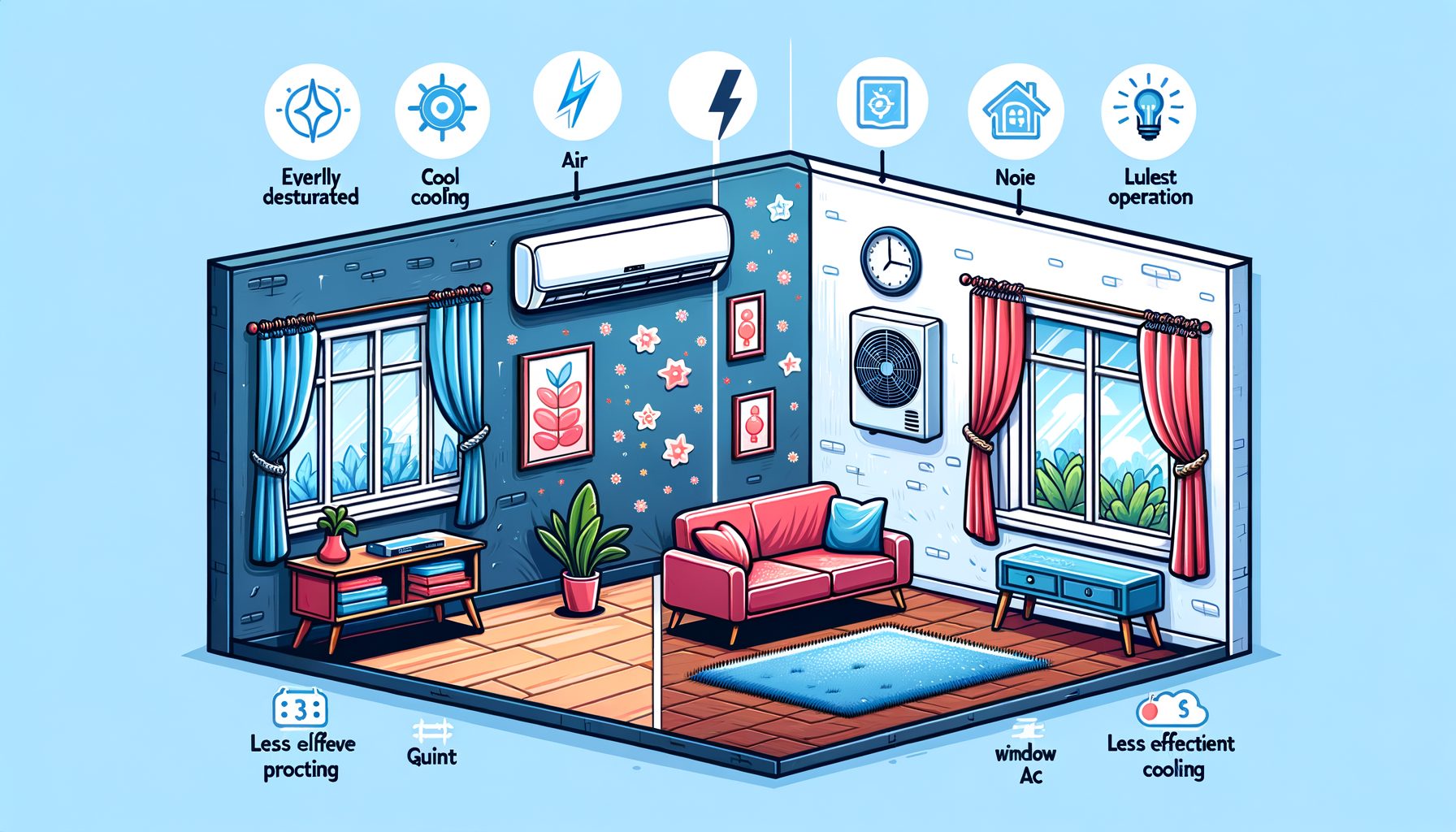
The main difference between split AC and window AC starts with design. A split AC has two parts: an indoor unit (evaporator) mounted on your wall and an outdoor unit (compressor and condenser) placed on a balcony, wall bracket, or rooftop. These two units are connected by copper piping and electrical cabling. A window AC, on the other hand, is a single, self-contained box that fits into a window frame or a wall sleeve. That design choice shapes almost everything that follows—installation complexity, noise, aesthetics, and even how you can position furniture in the room.
Installation for split ACs is typically more involved. You need a suitable wall for the indoor unit, a place to mount the outdoor unit, and a safe path to run refrigerant pipes (usually up to 10–15 meters, but shorter is better). Professional installation is essential to prevent refrigerant leaks, poor drainage, or reduced efficiency. Window ACs are simpler: if your window or wall opening matches the unit size, you can often complete the setup in a single visit. That simplicity is a big reason landlords and renters favor window units—especially in older buildings where drilling holes or adding brackets is restricted.
Space and aesthetics also differ. Split ACs are slim and sleek indoors, freeing up your window and letting in light. They’re easier to position for good air distribution and can be paired with multi-split systems to cool multiple rooms using one outdoor unit. Window ACs require a dedicated window or wall slot and partially block light and view. In smaller bedrooms or dorms, though, a compact window unit can be a lifesaver because it requires minimal rearrangement and no visible pipes or conduits along walls.
From practical experience on residential projects, two recurring issues stand out. First, condensation management: split ACs typically route condensate outdoors via a drain line; window units must be leveled slightly outward to avoid dripping indoors. Second, airflow direction: split units usually offer better, wider throw—important in long rooms—while window units can create a “cold corner” if furniture sits too close. If your building allows external mounting and you care about a clean look and quieter operation, a split AC wins. If you need quick, low-hassle cooling in one small room, a window AC keeps things simple and affordable.
Energy Efficiency and Running Costs: Which Saves More Over Time?
Energy efficiency is where many buyers can save the most money long-term. Split ACs—especially inverter models—tend to be more efficient than window ACs. Inverter technology varies compressor speed to match the cooling load, reducing energy spikes and improving comfort. Window ACs have historically used fixed-speed compressors, though newer inverter window models exist in some markets. When comparing units, check regional energy labels and metrics: EER (Energy Efficiency Ratio), SEER (Seasonal Energy Efficiency Ratio), or ISEER (Indian Seasonal EER). Higher numbers mean better efficiency.
Seasonal cost depends on three things: how efficient the unit is, how many hours you run it, and the price you pay per kWh. For a typical 1-ton (≈12,000 BTU/h or 3.5 kW) room, running 500–1,000 hours per year, even a small efficiency difference can add up. As a quick benchmark, many modern inverter split ACs deliver ISEER/SEER figures in the 4.0–5.2 range, while typical window units might sit around 3.0–3.5. In practice, that can translate to 15–35% lower energy use, especially during partial-load conditions (evenings, mild days, or well-insulated rooms).
The table below illustrates typical ranges for a 1-ton unit using a mid-tier electricity price of $0.15/kWh. Your costs will vary by climate, insulation, thermostat habits, and power prices, but the comparison shows how efficiency impacts the bill.
| Aspect | Split AC (Inverter, 1 Ton) | Window AC (1 Ton) |
|---|---|---|
| Typical Seasonal Efficiency | SEER/ISEER ≈ 4.2–5.2 | EER/SEER ≈ 3.0–3.5 |
| Estimated kWh per 500 hours | ≈ 550–700 kWh | ≈ 700–900 kWh |
| Estimated Cost at $0.15/kWh (500 hours) | $83–$105 | $105–$135 |
| Noise (Indoor) | Low (often 20–35 dB) | Moderate (often 45–60 dB) |
To compare models correctly, use trusted labels and calculators. In the U.S., see ENERGY STAR’s guidance for room air conditioners at energystar.gov and the Department of Energy’s consumer tips at energy.gov. In India, check ISEER star ratings via the Bureau of Energy Efficiency at beeindia.gov.in. For global context on cooling demand and efficiency trends, the International Energy Agency’s report is a great overview: iea.org. Bottom line: if you run AC regularly, an efficient split inverter typically pays back the premium within a few seasons through lower bills—especially in warm or humid climates.
Comfort, Noise, and Air Quality: Daily Experience Matters
Comfort is more than just hitting a set temperature. It’s about stable cooling, low noise, good airflow, and acceptable humidity. Split ACs excel in quiet operation because the compressor sits outside and the indoor unit uses a low-noise fan. Many split units operate under 30 dB on quiet modes—library-level silence—so they’re ideal for bedrooms and WFH areas. Window units contain both the fan and compressor in one chassis right at the window, which means more vibration and higher noise, often in the 45–60 dB range. For light sleepers or podcasters, that difference is a big deal.
Temperature stability is another advantage for inverter splits. By continuously adjusting compressor speed, they reduce the “cold-hot” cycling you might feel with fixed-speed window units. The steadier operation also helps with humidity control. In humid areas, removing moisture is as important as lowering temperature; many split models have dedicated dehumidification modes and better coil design, keeping indoor air feeling less clammy. Window units can dehumidify too, but the experience may be less consistent in partial-load conditions.
Air distribution and filtration further separate the two. Split ACs typically have wider louvers and more precise swing controls, helping spread cool air across longer rooms and around obstacles. Most include multi-stage filters (dust, PM2.5, sometimes activated carbon) and some offer washable filters that are easy to remove from the front. Window ACs usually feature a single washable mesh filter and simpler airflow control. In small rooms, that’s fine; in larger or oddly shaped rooms, air might pool near the unit.
From field observations in apartments and small offices, users consistently report that split systems “disappear into the background,” making them easy to forget—which is exactly what you want from climate control. Window units, while effective, can draw attention with compressor buzz, airflow noise, and a blocked window view. If you’re sensitive to sound or prefer a more premium feel, a split AC is the safer bet. If you prioritize a quick, practical solution and don’t mind moderate noise, a window AC remains a solid, budget-friendly choice.
Upfront Price, Maintenance, and Lifespan: Total Cost of Ownership
When comparing costs, consider not just the sticker price but installation, maintenance, energy use, repairs, and lifespan. Window ACs win on upfront cost. A typical 1-ton window unit often costs significantly less than an equivalent split AC, and installation is straightforward (sometimes DIY with proper safety, though professional installation is recommended). Split ACs have higher unit prices and require professional installation—adding charges for mounting, copper piping, vacuuming, and refrigerant top-up if needed. In many markets, the installed cost for a split can be 1.5–3x that of a window AC.
Maintenance has two sides: frequency and complexity. Both types require filter cleaning every 2–4 weeks in dusty environments and professional servicing at least once a year. Split systems have more components—indoor fan coil, outdoor compressor, drain line—that need attention. Clogged drains are a common split issue but are easy to prevent with regular servicing. Window units are simpler to service but can be trickier to access if they’re tightly fitted into a wall sleeve. In either case, staying on top of cleaning preserves efficiency and extends life.
Lifespan tends to be slightly longer for well-installed split systems—often 10–12 years—with window units typically in the 7–10 year range, depending on usage and maintenance. Availability of parts and after-sales support matters: popular split brands usually have better spare part ecosystems and more service partners. On the environmental side, consider refrigerants. Many modern splits and some window units use R32, which has a lower global warming potential than older R410A or legacy R22. Proper installation and leak testing help minimize refrigerant losses, which protects both efficiency and the environment.
How do these pieces add up? If you use AC heavily (long, hot summers or 8+ hours a day), an efficient split inverter’s energy savings can offset the higher upfront cost in a few seasons. If you’re a light user (weekends, occasional heatwaves) or moving soon, a window unit’s low initial cost and portability might be smarter. To estimate your total cost of ownership, multiply expected kWh per season by your electricity price, add routine maintenance, and amortize the purchase/installation over the expected lifespan. That simple math makes the decision much clearer—and more personal to your situation.
Who Should Buy What? Scenarios and a Quick Decision Framework
If you’re torn between split and window AC, match your situation to these common scenarios to clarify the choice:
– You value silence, aesthetics, and stable comfort: Go for a split inverter. Bedrooms, nurseries, studios, or home offices benefit most. The quieter operation improves sleep and focus, and the steadier temperature control helps with comfort in humid climates.
– You need fast, affordable cooling in a small room: Choose a window AC. It’s easy to install, easy to maintain, and perfect for renters or students who may move within a year or two. Just verify the window/wall opening and support brackets for safety.
– You cool multiple rooms or plan a long-term setup: Consider a multi-split system. One outdoor unit connects to two or more indoor units, saving exterior space and simplifying maintenance. The upfront cost is higher but can be efficient and clean-looking.
– You live in a building with installation restrictions: Window AC may be the only viable option. Some buildings disallow external condensers or drilling, while others provide pre-built wall sleeves. Always check HOA/landlord rules before purchasing.
– You’re in a very hot, humid region and run AC most of the year: Split inverter AC typically yields lower bills and better humidity control. Over time, that stability pays back through energy savings and comfort.
To finalize your decision, follow this quick framework:
1) Size the room correctly. A rough guide is 0.08–0.12 kW per square meter (or about 20 BTU/h per square foot), adjusted for sun exposure, ceiling height, and occupants. Over- or undersizing hurts efficiency and comfort.
2) Compare labeled efficiency. Look for ENERGY STAR in the U.S., ISEER star ratings in India, or trusted labels in your country. Higher SEER/ISEER typically equals lower bills. Reference: ENERGY STAR, BEE India.
3) Map total costs. Add purchase + installation + estimated energy for 3–5 years. If the split AC pays back within your expected stay, it likely wins.
4) Check noise and placement. If you’re noise-sensitive or working from home, favor splits. Ensure a drainage path for condensate and a safe, accessible outdoor mounting point.
5) Think maintenance and support. Choose a brand with accessible service and spare parts. Regularly clean filters; plan annual servicing to keep efficiency high.
Using this approach, you’ll choose the AC type that matches not just your budget, but also your lifestyle and long-term plans.
FAQs
How do I choose the right AC capacity for my room?
Estimate capacity by room size, sun exposure, insulation, and occupancy. A rough guide is 0.08–0.12 kW per square meter (≈20 BTU/h per square foot). Add capacity for sun-drenched rooms, high ceilings, or rooms with many devices. Undersized units run constantly and struggle to dehumidify; oversized units short-cycle and waste energy.
Is an inverter AC really worth the extra cost?
Usually, yes—especially if you run AC for several hours a day. Inverter models adjust compressor speed to match cooling needs, reducing energy use, improving temperature stability, and lowering noise. Over a few seasons, savings often offset the higher purchase price.
Can I install a window AC myself?
Some people do, but safety comes first. Window units are heavy and must be securely supported. Poor installation can cause water leaks, rattling, or even falls. If you’re unsure, hire a professional. Always follow the manufacturer’s instructions and building rules.
What about maintenance for both types?
Clean or wash filters every 2–4 weeks during peak season. Schedule annual professional servicing to check refrigerant pressures, coils, and drainage. For splits, ensure the drain line is clear. For windows, keep the unit slightly tilted outward to prevent indoor drips.
Conclusion
Choosing between a split AC and a window AC comes down to how you live, how much you run the unit, and what you value most—silence and aesthetics, or simplicity and upfront savings. Split ACs usually deliver higher efficiency, quieter operation, and better comfort control, making them ideal for bedrooms, home offices, and long-term setups. Window ACs shine when budgets are tight, rooms are small, installation options are limited, or you need a quick, reliable fix without extensive modifications.
Here’s your action plan: first, measure your room and estimate the right capacity. Second, compare efficiency labels (SEER/ISEER/EER) and shortlist models with strong ratings from trusted programs like ENERGY STAR or BEE India. Third, get at least two quotes—one for a split inverter installation and one for a comparable window unit—and include operating costs for your climate and electricity price. Finally, think about noise sensitivity and aesthetics: if those matter, a split AC’s quieter, cleaner look often justifies the extra upfront spend.
If you run AC most days, the long-term winner is usually the split inverter, thanks to energy savings and comfort. If you’re a light user or a renter seeking a practical, low-commitment solution, a window AC is an excellent value. Whatever you choose, regular filter cleaning and annual servicing will protect performance and keep bills in check.
Make your decision, commit, and enjoy a cooler, calmer space this season. The best AC is the one that fits your reality—not just the spec sheet. Ready to take the next step? Grab your room measurements, check energy labels, and request your quotes today. You’ve got this—comfort is a choice you can make right now. Which room are you cooling first?
Sources:
– ENERGY STAR: Room Air Conditioner Guidance — https://www.energystar.gov
– U.S. Department of Energy: Room Air Conditioners — https://www.energy.gov/energysaver/room-air-conditioners
– Bureau of Energy Efficiency (India): Star Labeling (ISEER) — https://beeindia.gov.in/labels
– International Energy Agency: The Future of Cooling — https://www.iea.org/reports/the-future-of-cooling
– Energy Saving Trust (UK): Cooling and Air Conditioning Advice — https://energysavingtrust.org.uk