
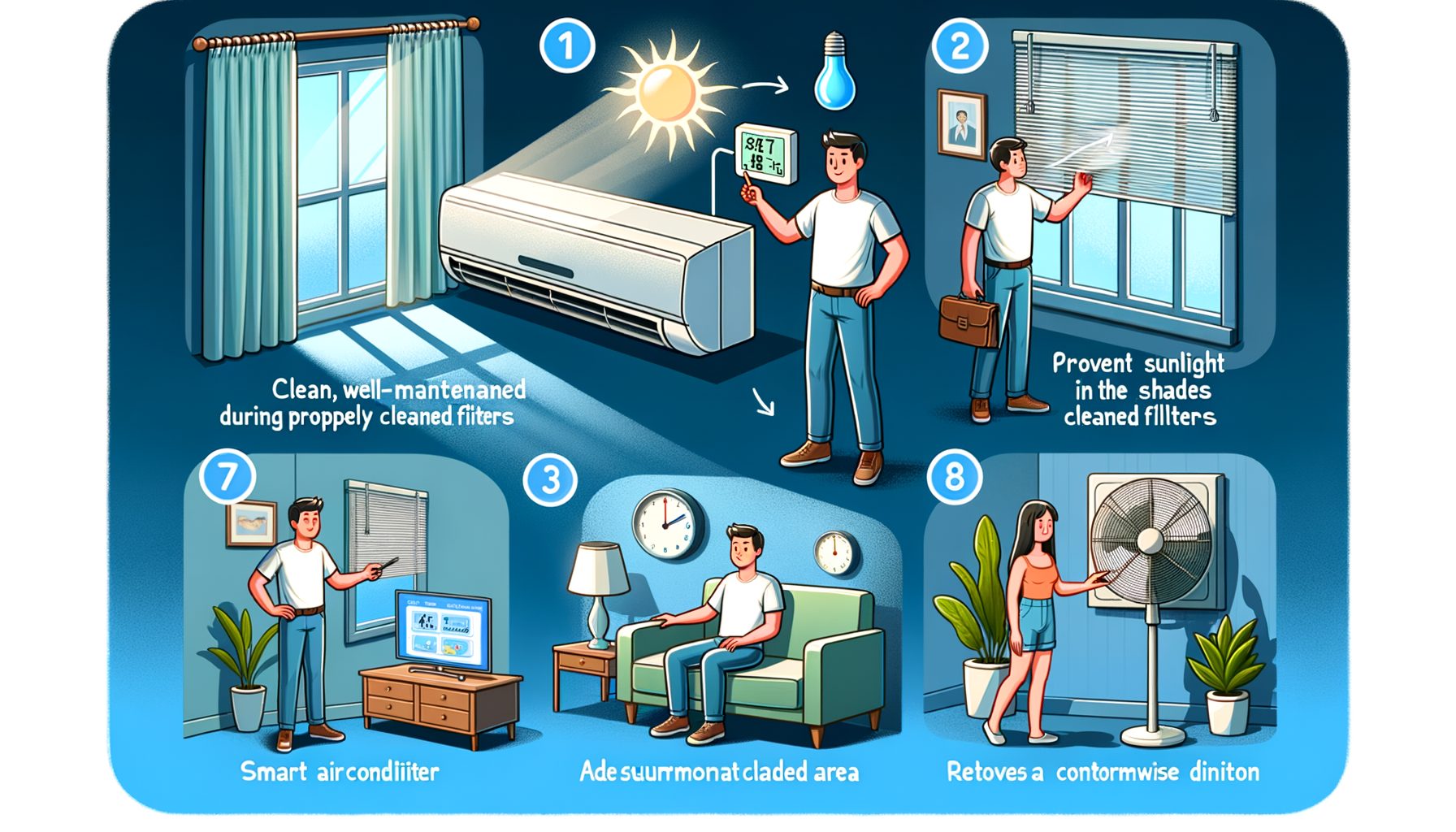
If your home still feels sticky and warm even with the air conditioner running, you’re not alone. As heat waves intensify, countless homeowners look for proven ways to boost AC performance in brutal summer heat. Here’s a plain-language, data-backed plan with steps you can use today so your AC cools faster, cheaper, and smarter.
Why Your AC Struggles in Extreme Heat (And What You Can Fix First)
Blame simple physics. As outdoor temperatures rise, the difference between inside and outside grows, and your system must remove more heat every minute just to hold the line. Humidity piles on. When indoor air is moist, the AC has to dehumidify while it cools—a double shift that slows temperature drop and leaves rooms clammy.
Meanwhile, the house soaks up heat from many directions: sun-baked windows, attic radiation, and internal loads from cooking, showers, electronics, and lighting. Per ENERGY STAR, ducts running through hot attics often leak 20–30% of conditioned air before it reaches rooms. If the unit is a bit undersized or airflow is throttled by restrictive ducts, it may run nonstop and still fail to catch up during late-afternoon peaks.
Watch for clues that point to root causes. Slow temperature drop with long run times suggests high indoor humidity, a dirty filter, blocked returns, or low airflow across the evaporator coil. Rooms that never cool evenly hint at duct leakage or poor supply/return placement. Rapid on-off cycling (short cycling) can indicate an oversized system or incorrect refrigerant charge.
Good news: quick fixes pay off. Start with airflow and heat gain—swap in a clean filter, open and clear return grilles, and shade windows that take direct sun. Combine that with smart thermostat scheduling and you’ll feel a difference the same day. For deeper issues like low refrigerant, high static pressure, or major duct leaks, professional testing is worth it; small improvements often unlock big comfort and energy savings.
Thermostat Settings and Everyday Habits That Deliver Immediate Wins
Smart thermostat choices matter. Aim for 24–26°C (75–78°F) when you’re home. Dropping the setpoint lower won’t cool the house faster—it only makes the AC run longer and increases the risk of over-drying or icing coils. Schedules help: let the temperature float up while you’re away and recover before you return. The U.S. Department of Energy estimates up to 10% annual savings by setting back 7–10°F (about 4–6°C) for 8 hours a day in cooling and heating seasons.
Fans are your secret weapon. Air movement speeds sweat evaporation, making you feel roughly 2–4°F (1–2°C) cooler. That comfort boost lets you raise the setpoint and still feel good—a direct efficiency win. Remember, fans cool people, not rooms, so switch them off when you leave.
Set the fan mode to “Auto,” not “On,” to prevent humidity from re-evaporating off the coil when the compressor is off. If your thermostat or mini-split offers a dehumidify or “dry” mode, try a target around 45–55% RH. Lower humidity helps the air feel cooler even at a higher temperature setting.
Pre-cool with intention. When afternoons hit 35–40°C (95–104°F), drop blinds early and let the system get ahead in the morning when it has an easier job. Cook outdoors or use small appliances instead of the oven. Keep interior doors open if you rely on a central return so air can circulate. Don’t bury supply registers behind furniture, rugs, or drapes—freeing blocked vents often yields instant improvement.
Stability beats swings. Avoid big, rapid setpoint changes; use 1–2°C (2–3°F) steps and wait 30–60 minutes to judge results. Consistent habits reduce runtime, flatten humidity swings, and keep comfort steady during punishing heat.
Maximize Airflow: Filters, Coils, Vents, and Ducts
Airflow is the lifeblood of AC performance. A clean filter and open return paths can raise capacity and trim energy use the same afternoon. According to the U.S. Department of Energy, replacing a dirty, clogged filter can cut AC energy consumption by 5–15%. Choose wisely: a MERV 8–11 pleated filter balances filtration and airflow for most homes. Ultra-high MERV options can strain systems not designed for them, increasing static pressure and reducing cooling. In summer, check filters monthly and replace every 1–3 months; homes with pets, construction dust, or allergies may need more frequent changes.
Give vents and coils a clear path. Keep supply registers and return grilles unblocked by sofas, curtains, or boxes, and vacuum away lint. If the evaporator coil is visible (often above the furnace/air handler), make sure it isn’t matted with debris; a choked coil starves airflow and can freeze. Outside, maintain at least 60 cm (24 in.) of clearance around the condenser and rinse fins gently from the inside out. Bent fins? A fin comb can help.
Ducts deserve a close look, especially in hot attics or crawlspaces. Leaks waste cooled air and can pull hot, dusty air into the system. Seal visible gaps with mastic or UL 181-rated foil tape (skip cloth “duct tape”). Insulate bare ducts in unconditioned spaces. Uneven room temperatures often point to unbalanced airflow or high static pressure—a cue to get professional testing of total external static pressure (TESP) and delivered CFM per ton.
Quick maintenance actions and what they typically change:
| Task | Time | What you’ll notice |
|---|---|---|
| Replace dirty filter (MERV 8–11) | 5 minutes | 5–15% lower AC energy use; stronger airflow |
| Clear/clean supply and return vents | 10 minutes | Faster cooling; more even room temperatures |
| Wash outdoor condenser fins | 20 minutes | Better heat rejection; quieter operation |
| Seal obvious duct leaks | 1–2 hours | Up to 10–20% more delivered cooling |
Restore the airflow your system was designed for and the house often feels cooler the same day—no thermostat change required.
Keep the Heat Out: Shade, Insulation, and Simple Home Fixes
The cheapest watt is the one you never use. Cut heat gain and the AC removes less heat, runs fewer minutes, and catches up faster after peak hours. Start with glass: sun-facing windows act like heat sponges. Close blinds or reflective shades before the sun hits. The U.S. Department of Energy reports that awnings can reduce solar heat gain by up to 65% on south-facing windows and 77% on west-facing windows. Exterior shading (awnings, shutters, exterior screens, or trees) usually beats interior shades, but even lined curtains help.
Next, stop outside air sneaking in. Weatherstrip doors, seal big gaps with caulk or foam, and close the fireplace damper when not in use. Air leaks bring in hot, humid air that adds both heat and moisture. Thin or uneven attic insulation? Upgrading often delivers year-round savings and a cooler top floor. While local codes vary, many homes benefit from roughly R-38 to R-49 in the attic (check local guidance). In very sunny climates, a radiant barrier under the roof deck can drive down attic temperatures and lighten the AC’s load.
Limit internal heat sources. Skip the oven or dryer during the afternoon peak. Favor induction or microwave cooking. Swap older bulbs for LEDs to cut heat and save energy. Power down unused electronics and put hot-water recirculation pumps on a timer.
Don’t forget humidity control. In muggy regions, a standalone dehumidifier or a heat pump with a dedicated dehumidify mode can help. Keeping indoor RH around 45–55% improves comfort at a slightly higher temperature setting, so you feel cool while the AC works less—especially noticeable overnight.
Stack these small fixes and results arrive quickly. Many households see better comfort within days and a lower energy bill by next month, with far fewer “can’t keep up” afternoons.
When to Call a Pro—and What to Ask For
Some issues demand instruments, not guesswork. If the system ices up, short cycles, blows warm air, or summer bills spike without a clear cause, book a professional evaluation. Ask for measurements, not just a visual glance. A quality tune-up should include static pressure, delivered airflow (CFM), superheat/subcool to verify refrigerant charge, temperature split across the coil, and—where feasible—a duct leakage check.
Refrigerant charge must be right; both undercharge and overcharge cut capacity and efficiency. Airflow is just as critical. Many systems deliver only 250–300 CFM per ton, yet they need 350–450 CFM per ton to perform. When high static pressure shows up, the fix might be straightforward: add a return, resize a bottleneck duct, or install a less restrictive filter rack.
Planning a replacement? Insist on a load calculation (often “Manual J”) rather than sizing by old equipment or square footage rules. Oversized units short cycle, struggle with humidity control, and wear out faster. Consider variable-speed or inverter-driven systems; they modulate to match the load and shine during long, hot afternoons. Compare SEER2 and EER2 ratings for apples-to-apples efficiency, and look for rebates or incentives from utilities or government programs.
Maintenance sets you up for trouble-free summers. An annual check before hot weather arrives can prevent most no-cool emergencies. Expect a cleaned coil, verified charge, and airflow dialed to target. Paired with your monthly filter checks and simple shading and sealing, professional care keeps efficiency high through the hottest days.
Quick Q&A: Cooling Efficiency Essentials
What’s the best temperature for summer? Aim for 24–26°C (75–78°F) when you’re home. Use fans to feel 1–2°C cooler so you can raise the setpoint and save energy without losing comfort.
How often should I change my AC filter? Check monthly in summer and replace every 1–3 months. Homes with pets, dust, or renovations may need more frequent changes to maintain airflow.
Do closed vents help cool unused rooms? Usually not. Closing vents raises duct pressure, increases leakage, and can reduce overall cooling. Balanced airflow beats blocking vents.
Conclusion: Your Action Plan for a Cooler, Cheaper Summer
Now you’ve got a practical path to better comfort: cut heat gain, dial in thermostat habits, restore airflow, and call a pro when measurements—not guesses—are needed. Start with what takes minutes: set a realistic target, run ceiling fans in occupied rooms, close sun-facing blinds early, and replace a clogged filter with a fresh MERV 8–11.
Next, rinse the outdoor condenser fins, clear every supply and return grille, and seal reachable duct gaps. Then layer in upgrades—awnings or exterior screens for the hottest windows, added attic insulation where it’s thin, and dehumidification if humidity drives discomfort more than temperature.
As these steps stack, you’ll feel faster cooldowns, steadier humidity, and see a lower energy bill that proves the AC is finally working with you. If it still struggles, ask a pro to measure airflow, static pressure, and refrigerant charge. A few adjustments can unlock performance your equipment already has—no guesswork, no endless thermostat fiddling.
Act today: pick three quick wins before the next hot afternoon. Your future self—cooler, calmer, and spending less—will thank you. Comfort and efficiency aren’t opposites; with a few smart moves, they reinforce each other. Ready to feel the difference this week? Which step will you tackle first—filter, thermostat schedule, or window shading?
Helpful Resources
U.S. Department of Energy – Air Conditioning
ENERGY STAR – Heating & Cooling Tips
U.S. EPA – What is a MERV rating?
International Energy Agency – The Future of Cooling
ASHRAE – Standards and Guidelines (comfort and ventilation)
Sources
U.S. Department of Energy, Energy Saver: Air Conditioning and Cooling Efficiency Guidance.
ENERGY STAR: Duct Sealing, HVAC Efficiency, and Maintenance Recommendations.
U.S. Environmental Protection Agency: MERV Ratings and Filtration Basics.
International Energy Agency: Cooling demand trends and efficiency opportunities.
ASHRAE: Thermal comfort and ventilation principles informing setpoint and airflow best practices.