
Grimy AC filters seem small, yet they trigger big headaches: dusty rooms, allergy flare-ups, funky odors, and higher bills. A quick, low-cost fix exists. In this step-by-step guide, you’ll learn how to clean AC filters at home for better air and better performance—no special tools or technical skills required. Whether you run a split AC, window unit, portable AC, or a central HVAC system, the instructions below help you dodge common mistakes, extend filter life, and breathe more easily. Keep reading to see why filter care matters, what to prepare, exactly how to do it, how to troubleshoot odd smells or mold, and how to build a simple maintenance routine that sticks.
Why cleaning your AC filter matters more than you think
A clean AC filter serves as the front line for indoor air quality. When it’s clogged, airflow drops and efficiency takes a hit. The fan then works harder, rooms cool more slowly, and energy costs climb—sometimes without you noticing. Multiple energy authorities estimate that dirty filters can boost energy use by 5–15%. If cooling runs several hours a day, the seasonal cost adds up fast. Dust and pollen can even re-circulate if a filter is damaged or installed the wrong way. For anyone with allergies or asthma, that’s no small thing. Keeping filters clean helps coils stay cleaner too, protecting the compressor and lowering breakdown risks.
Filters aren’t all the same. Many homes use pleated disposable filters rated by MERV (Minimum Efficiency Reporting Value), typically MERV 5 to 13. Higher MERV captures finer particles—but may also increase airflow resistance if the system wasn’t designed for it. Window and split ACs usually rely on washable mesh filters that trap larger dust, not smoke or ultra-fine pollutants. Need deeper filtration for smoke or wildfires? Use a higher-MERV filter in a central system or add a separate HEPA air purifier. The trick is to match your filter to your needs and clean or replace it on time.
Real-world note: after cleaning a heavily clogged filter, people often notice a quieter fan and faster cooling. In small apartments, a quick rinse of a mesh filter can shave minutes off the time to reach comfort. Unsure whether it’s worth it? Give it a try—cleaning typically takes under 20 minutes.
Here’s a quick snapshot of how clean filters affect comfort, cost, and health:
| Factor | What Improves With a Clean Filter | Notes |
|---|---|---|
| Energy use | 5–15% lower vs. clogged filter | Varies by system and how dirty the filter was |
| Cooling speed | Faster airflow, quicker comfort | Especially noticeable in smaller rooms |
| Air quality | Less dust, pollen, and odors | Depends on filter type (mesh vs. pleated MERV) |
| Maintenance costs | Lower risk of coil dirt and breakdowns | Clean filters help keep coils cleaner |
| Noise | Fan can run quieter | Less strain on the blower |
For deeper reading on ventilation, filter basics, and energy efficiency, check Energy Star and the U.S. Environmental Protection Agency: https://www.energystar.gov and https://www.epa.gov/indoor-air-quality-iaq.
What to prepare before you start: tools, safety, and knowing your filter
Preparation makes the difference between a quick, tidy clean and a messy, risky one. Start by identifying your AC type and filter style. Common setups include: window ACs (usually a washable mesh filter behind the front grille), split ACs (a washable mesh filter in the indoor wall unit), portable ACs (often one or two mesh screens, sometimes plus a carbon pad), and central HVAC systems (a pleated disposable filter in a return grille or inside the air handler). Owners of central systems should note the size printed on the frame (e.g., 16x20x1 inches or 406x508x25 mm) and the MERV rating if shown.
Figure out whether the filter is disposable or washable. Pleated paper filters for central HVAC are generally not washable. If soaked or hosed, they can collapse, grow mold, or shed fibers—so replace them on schedule. Washable filters—typically plastic mesh in room ACs and splits—can be rinsed and gently cleaned with mild soap. Units with carbon or HEPA panels often require special handling per the manual; many of those inserts aren’t washable and should be replaced.
Safety first. Switch the unit off at the control panel and, if possible, unplug it or power down the breaker for central systems. Doing so prevents the fan from turning on while you’re handling internal parts. Have a trash bag for disposable filters, a soft brush or microfiber cloth, mild dish soap, a basin or sink, and a handheld vacuum with a brush attachment ready. For very dusty filters, a mask and gloves help—especially if you’re sensitive to allergens.
Households with pets, frequent dust or smoke, or lots of open-window days will load filters faster. In those cases, expect more frequent cleaning or replacement than the “standard” schedule. Try a quick pre-check: hold the filter up to a light. If little or no light gets through—or a gentle tap releases a puff of dust—it’s time. Also watch for airflow arrows on pleated filters; you’ll need that direction for reinstallation. One more simple step: snap a photo before removing anything to make reassembly stress-free.
Manuals can be gold. Most brands host PDFs online. For instance, Daikin and Carrier maintain filter maintenance pages with model-specific notes: https://www.daikin.com and https://www.carrier.com. A two-minute check can prevent accidental damage.
Step-by-step: how to clean AC filters at home
Follow the steps matched to your unit type. Work slowly and gently; filters are built to catch dust, not to withstand rough scrubbing.
For window, split, and portable ACs with washable mesh filters:
1) Power off the unit. Unplug if accessible. Wait until the fan stops.
2) Open the front panel or grille. On splits, lift the cover until it clicks. On windows/portables, remove the face or slide out the filter tray. Take a quick photo to remember orientation.
3) Remove the filter carefully. Note any secondary screen or carbon pad and its position. Avoid bending the frame.
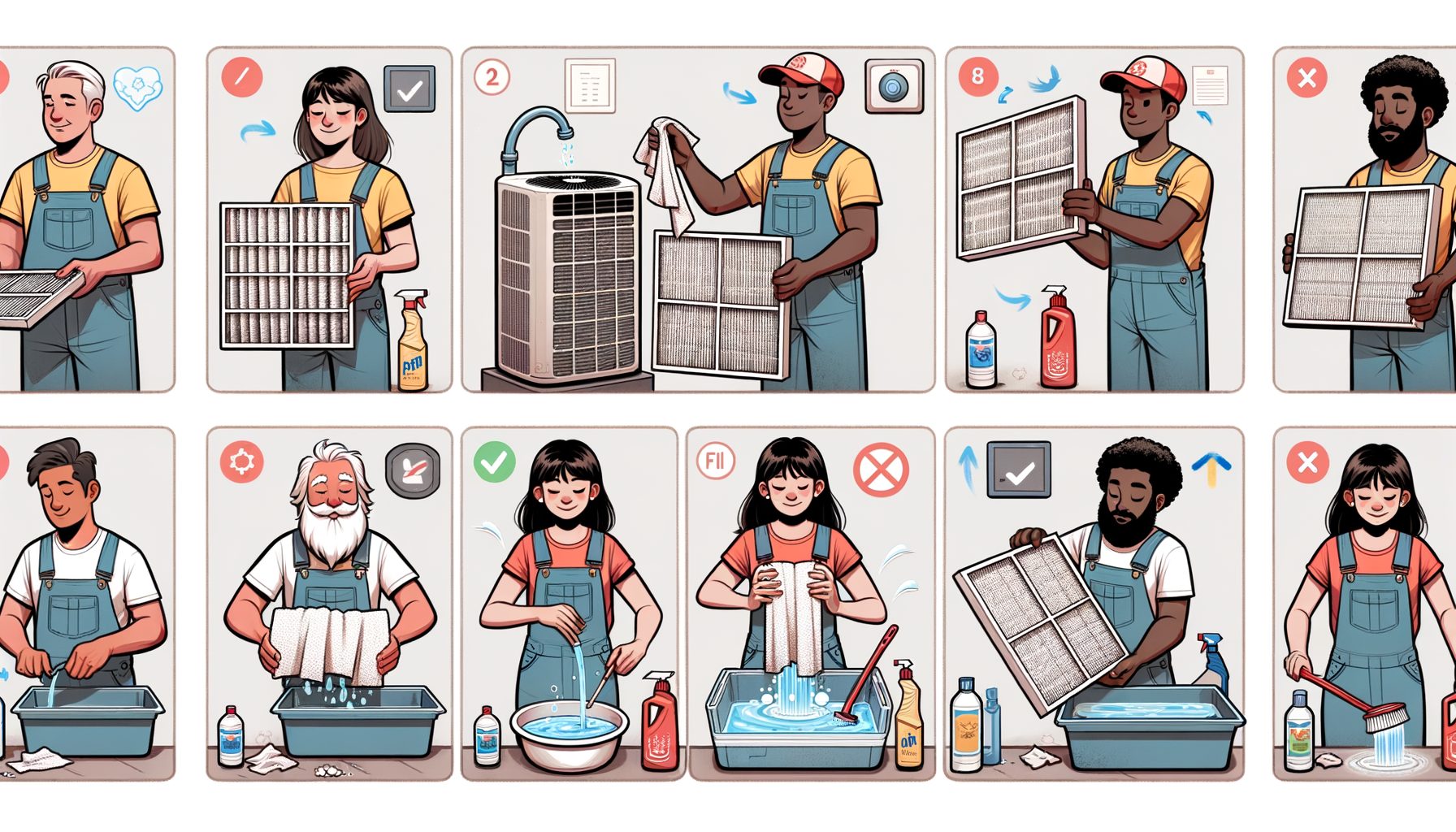
4) Start dry. Take the filter outdoors if possible. Tap lightly to release loose debris. Use a handheld vacuum with a soft brush to lift surface dust without tearing the mesh.
5) Wash gently. Fill a sink or basin with lukewarm water and a drop of mild dish soap. Submerge the mesh and swirl. Skip hot water, harsh chemicals, and pressure washers—those can warp plastic or enlarge mesh holes. If grime is stubborn, brush softly in one direction.
6) Rinse thoroughly. Run lukewarm water from the clean side toward the dirty side so dust is pushed out, not deeper in. Keep going until the water runs clear.
7) Air-dry fully. Shake off excess water. Stand the filter vertically or lay it flat on a clean towel. Allow complete drying—usually 30–90 minutes depending on humidity. Heat guns or hair dryers can warp plastic, so avoid them.
8) Reinstall. Confirm the filter is fully dry to avoid mold. Slide or snap it back with the correct orientation. Close panels securely.
9) Power on and test. Run the AC for a few minutes. Smoother airflow and lower fan noise are common.
For central HVAC with pleated disposable filters:
1) Turn off the system at the thermostat (set to Off) and, if possible, cut power at the switch near the air handler.
2) Find the filter at the return grille or inside the air handler door. Note the airflow direction arrows on the old filter.
3) Remove the old filter. If it’s very dusty, place it straight into a trash bag to avoid spreading dust.
4) Insert a new filter of the same size and an appropriate MERV rating for your system. Many residences do well with MERV 8–11; higher ratings may reduce airflow if the blower isn’t designed for it. When in doubt, check the manual or consult a technician.
5) Restore power and restart the system. Ensure the filter sits flat with no gaps or air bypass.
Quick tip for renters and students: can’t locate the filter in a central system? Check the largest return grille (often in a hallway) or the indoor unit closet. If the landlord handles it, ask when it was last changed. A clogged filter commonly causes weak airflow and higher bills.
Troubleshooting and pro tips to extend filter life
Still getting odors or weak airflow after a clean or replacement? Consider these usual suspects. First, musty smells often point to moisture. Condensate drains can clog, letting water sit and grow microbes. If your unit has a removable drain pan or visible drain tube, check and clear it per the manual. For window and portable units, a slight tilt is needed for proper drainage. Harsh chemicals should not be sprayed into the coil or fan. If the smell lingers, professional coil cleaning may be required.
Second, visible mold on a filter or inside the unit is a red flag. Don’t try to “save” a moldy disposable filter—bag it and replace it. Washable meshes with light spots can be cleaned with mild soap and water, then dried fully in sunlight if possible. If growth returns quickly, humidity might be high or the unit could be oversized for the room and short-cycling, leaving moisture behind. A dehumidifier or a slightly higher thermostat setting can help in humid climates.
Third, filters aren’t the only airflow bottleneck. Closed supply vents, a blocked return grille (hidden behind furniture), or a collapsed duct in central systems will reduce performance. Make sure vents are open, the return has 30–60 cm of clearance, and curtains aren’t drawing into the grille.
To extend filter life without sacrificing air quality, keep doors and windows closed while cooling, vacuum carpets and rugs weekly, and groom pets regularly. During high-pollen or wildfire periods, consider leaving the fan on “Auto” instead of “On” to reduce nonstop dust loading, and use a separate HEPA purifier in the rooms you occupy most. In central systems, MERV 8–11 is often a balanced choice; MERV 13 captures finer particles, but verify your blower can handle it.
Set a maintenance rhythm that fits your reality. One easy method: add a recurring reminder on your phone—every 2–4 weeks to check washable filters, every 1–3 months to replace pleated filters, and monthly during peak season or dusty conditions. Snap a quick photo after each cleaning or change and label it; your date-stamped gallery becomes a maintenance log. Notice your energy bill creeping up without a weather reason? Check the filter first—fastest win.
For broader guidance on ventilation and filtration, see the CDC’s building ventilation overview: https://www.cdc.gov/niosh/ventilation-zh/index.html and the EPA’s filter basics: https://www.epa.gov/indoor-air-quality-iaq/air-cleaners-and-air-filters-home.
FAQs: quick answers to common questions
How often should I clean or replace my AC filter? For washable mesh filters in window, split, and portable ACs, check every 2–4 weeks during heavy use and clean when dusty. For disposable pleated filters in central HVAC systems, replace every 1–3 months. Pets, dust, or near-constant AC use call for shorter intervals. Try the light test—if you can’t see light through most of the filter, it’s time.
Can I vacuum a filter instead of washing it? For mesh filters, vacuuming with a soft brush is a great first step, but rinsing removes more embedded dust. For pleated disposable filters, avoid vacuuming or washing—fibers can be damaged and capture efficiency drops. Replacement is the way to go.
Are higher MERV filters always better? Not always. Higher MERV captures finer particles but increases airflow resistance. If your blower isn’t designed for it, the system may struggle, run louder, or use more energy. Many homes find MERV 8–11 a good balance. If you need MERV 13 (e.g., for smoke), confirm system compatibility—or add a dedicated HEPA air purifier in key rooms.
What if my filter looks clean but the AC still smells? Look for moisture issues: a clogged condensate drain, standing water in the pan, or a dirty coil. Ensure the filter was fully dry before reinstalling. If the odor is sweet or chemical-like, turn off the unit and call a technician—potential refrigerant issues require professional handling.
Is it okay to use soap, vinegar, or bleach on filters? Use only mild dish soap and water on washable mesh filters, then rinse thoroughly. Avoid bleach, harsh chemicals, and hot water, which can degrade materials and leave residues that become airborne. Don’t wash pleated paper filters; replace them. If you suspect mold on the mesh, clean gently with soap and water and dry completely in sunlight if possible.
Conclusion: your next move for cleaner air, lower bills, and a cooler home
Quick recap: clean AC filters boost airflow, help your home cool faster, lower energy use by a noticeable margin, and keep indoor air cleaner—especially helpful if you have allergies or pets. You now know how to identify your filter type, gather the right tools, power down safely, and clean or replace the filter without damage. Common issues like musty smells, moisture, or weak airflow can be tackled, and a realistic maintenance routine can be set.
Act while it’s fresh. Set a recurring reminder to check your filter, then do a quick inspection today. Washable mesh filter? Rinse and dry it fully. Pleated disposable? Note the size and buy a spare so you’re never stuck running a clogged one. Consider bookmarking this guide and sharing it with a roommate, neighbor, or family member—the payoff in comfort and cost comes quickly.
Curious about going one step further? Energy Star and EPA guidance can help fine-tune your setup, choose the right MERV rating, and decide whether an air purifier makes sense for your space. Small habits, big gains: a clean filter every month or two can save energy, prevent breakdowns, and make your place feel fresher day after day. Your lungs, your wallet, and your AC will notice.
Ready to breathe better? Start by checking your AC filter right now. If it’s dusty, clean it. If it’s worn out, replace it. Keep it simple, stay consistent, and enjoy the difference tonight. What small change will you make today for cleaner, cooler air at home?
Sources and helpful links:
– ENERGY STAR: https://www.energystar.gov
– U.S. EPA Indoor Air Quality: https://www.epa.gov/indoor-air-quality-iaq
– Air Cleaners and Air Filters in the Home (EPA): https://www.epa.gov/indoor-air-quality-iaq/air-cleaners-and-air-filters-home
– CDC/NIOSH Ventilation Overview: https://www.cdc.gov/niosh/ventilation-zh/index.html
– Carrier (manufacturer support): https://www.carrier.com
– Daikin (manufacturer support): https://www.daikin.com