
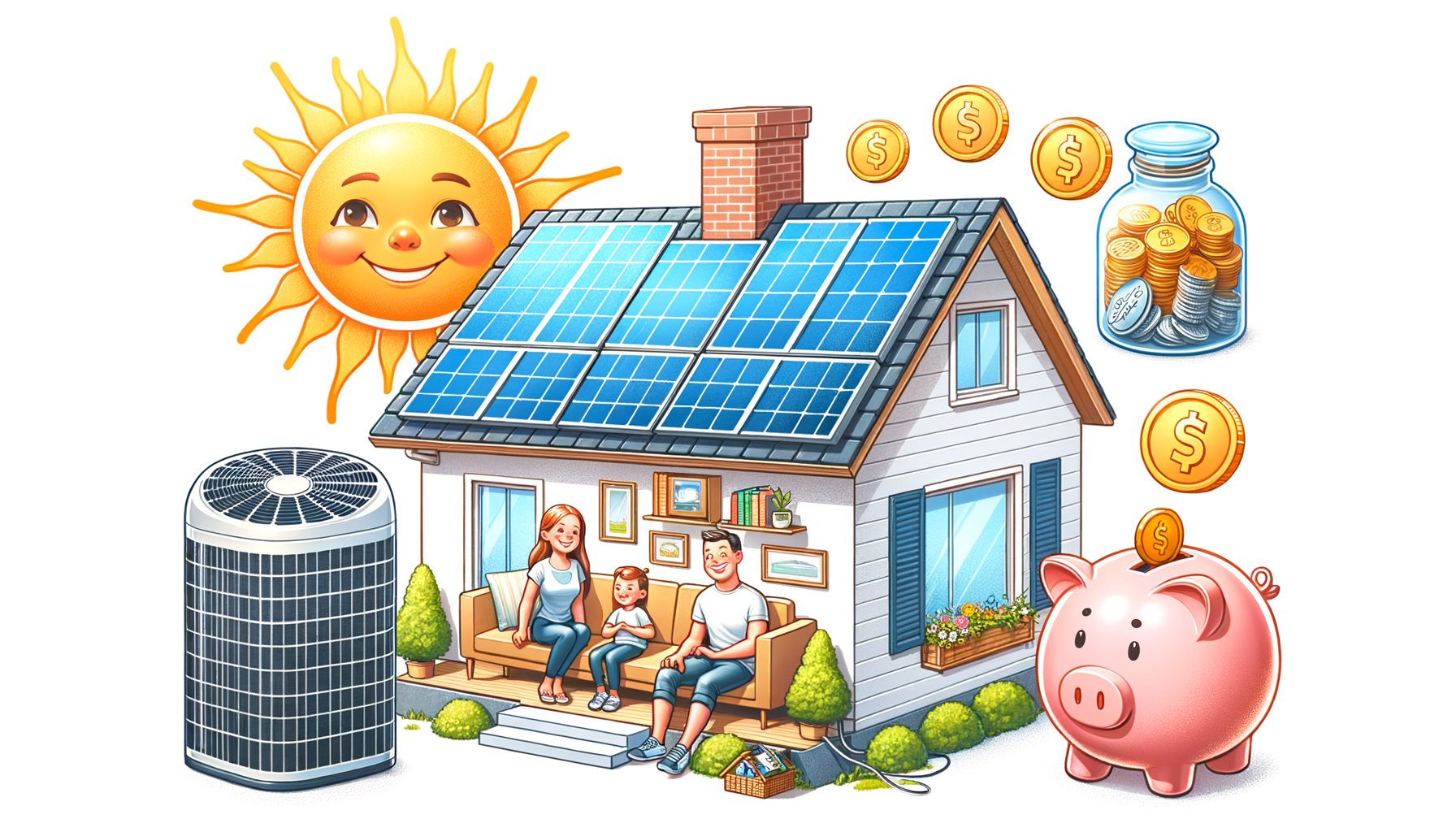
Electricity bills keep climbing, summers grow more intense, and plenty of homes still lean on aging, power-hungry cooling units. Naturally, more people are asking the same question: are solar-powered air conditioners worth it? In this guide, you’ll learn exactly how solar AC systems work, what they cost, how much they can save in different regions, and whether they make sense for your home or small business. If you’ve ever wondered whether panels on your roof can reliably cool your rooms while cutting carbon and bills, keep reading—the answer is nuanced, and the opportunity is big.
How Solar-Powered Air Conditioners Work: Options, Components, and Real-World Performance
“Solar-powered air conditioner” can refer to several setups, and the best choice hinges on climate, roof space, utility rates, and budget. The most common approach uses a grid-tied photovoltaic (PV) system to power a high-efficiency inverter air conditioner (often a mini-split). In this setup, rooftop panels generate DC electricity. An inverter turns it into AC. Your AC and other appliances use that power immediately. Any surplus flows to the grid—or a battery, if installed. When clouds roll in or the sun sets, the grid supplies your needs. In many regions with net metering or export credits, daytime solar offsets nighttime usage on the bill.
Other options exist. PV-direct DC mini-splits are designed to run primarily on solar during the day; small hybrid inverters or controllers can let the grid assist when sunlight dips. These shine in sunny offices, shops, or homes occupied during peak sun hours. At larger scales—think commercial buildings or district cooling—solar thermal chillers and absorption systems use heat from solar collectors to drive the cooling cycle. For most households, though, PV plus an inverter mini-split hits the sweet spot for simplicity, cost, and reliability.
Efficiency makes the combo work. Modern variable-speed (inverter) mini-splits with high SEER/EER/COP ratings often sip just 500–1,000 watts while keeping a well-insulated room comfortable. A typical 400 W panel under strong sun produces about 300–380 W; a 2–3 kW array in a sunny region can cover a large share of an efficient 1–1.5 ton (3.5–5.3 kW cooling) unit’s daytime use. The closer your cooling demand matches midday solar—which is also the hottest part of the day—the more your panels will directly serve the AC, cutting grid imports. Smart thermostats and simple tactics like pre-cooling before late-afternoon heat help align loads with solar output.
Real-world results vary by site. A shop owner in Seville paired a 3 kW array with a 3.5 kW inverter mini-split and cut summer cooling bills by more than half because business peaks at midday. In Phoenix, a family sized a 5 kW rooftop system for whole-home needs, including a 2-ton central heat pump; with time-of-use rates, they programmed pre-cooling to shave 20–30% off peak imports. Over in Bengaluru, a homeowner matched a 1.5-ton DC mini-split with ~2.4 kW of PV and found daytime cooling largely self-powered, with the grid covering evenings. Different places, same pattern: efficient equipment plus thoughtful operation makes solar-powered cooling practical and surprisingly effective.
Costs: Equipment, Installation, Incentives, and Maintenance
Total cost depends on system size, local labor, incentives, and whether you add batteries. PV prices have fallen sharply worldwide, while high-efficiency inverter AC units remain competitively priced. As a ballpark, a small 2–3 kW rooftop PV array plus a quality single-zone mini-split can range from a few thousand dollars in cost-competitive markets to five figures where soft costs are higher. Then this: batteries add flexibility and resilience but also raise the budget significantly. What’s interesting too, many countries offer rebates, tax credits, or low-interest loans that shorten payback.
Well, here it is—the quick breakdown of typical cost components (in USD). Regional variation is wide, so get multiple quotes from certified installers.
| Item | Typical Cost Range | Notes |
|---|---|---|
| High-efficiency inverter mini-split (single-zone) | $800–$2,500 (equipment) | Installation often adds $1,000–$3,000 depending on line set length, electrical, and mounting. |
| PV modules | $1.00–$4.00 per watt (installed) | Lower end in cost-competitive markets; higher in regions with higher labor/soft costs. |
| Inverter (string or hybrid) | $0.20–$0.50 per watt | Microinverters sometimes priced per panel; hybrids enable battery later. |
| Battery storage (optional) | $400–$900 per kWh | Improves self-consumption and backup; not required for most savings cases. |
| Racking, BOS, permits | $0.30–$1.00 per watt | “Balance of system” and permitting vary widely by country and utility. |
| Maintenance | $0–$200 per year | DIY cleaning and filter changes keep costs low; professional service recommended periodically. |
In the United States, recent benchmark reports show residential PV commonly at $2.50–$4.00/W installed before incentives, with a 30% federal tax credit for eligible systems. See the U.S. Department of Energy guidance on tax credits at https://www.energy.gov/eere/solar/homeowners-guide-federal-tax-credit-solar-photovoltaics. Across Europe, installed costs vary by country but have trended downward; local grants or VAT reductions can materially improve payback. The International Energy Agency tracks global cost trends and policy updates: https://www.iea.org/.
Don’t overlook soft costs like permitting, inspections, and potential panel upgrades. In older homes, installers may recommend a subpanel or added safety gear. Maintenance stays straightforward: keep AC filters clean, clear the outdoor condenser coil, and wash panels when dust or pollen builds up. Most panels carry 20–25 year performance warranties; inverters typically last 10–15 years. High-quality mini-splits can run 12–20 years with routine care. For an overview of efficiency ratings and how to choose efficient units, check ENERGY STAR: https://www.energystar.gov/.
Savings and Payback: What You Can Expect
Whether solar-powered air conditioning “pays off” hinges on three levers: your electricity price, your solar resource, and your cooling efficiency. High prices plus strong sun can deliver impressively fast payback. Lower prices and cloudier winters can still work—especially if you’ll live in the home long-term—but payback stretches.
Let’s frame it with realistic scenarios for a 1.5-ton (≈5 kW cooling) high-efficiency inverter mini-split serving a living room/bedroom zone. Assume annual cooling consumption of 1,500–2,500 kWh depending on climate and home efficiency. A 3 kW PV array produces different energy by location; values below show typical annual yields per 1 kW of PV and local residential energy prices. These are simplified illustrations; use a calculator like NREL’s PVWatts (https://pvwatts.nrel.gov/) or the Global Solar Atlas (https://globalsolaratlas.info/) for site-specific numbers.
| Scenario | PV Yield (kWh/kW/yr) | Elec. Price (USD/kWh) | AC Usage (kWh/yr) | 3 kW PV Output (kWh/yr) | Estimated Annual Bill Offset | Simple Payback (after incentives) |
|---|---|---|---|---|---|---|
| High sun + high price (e.g., Phoenix, parts of Australia, Mediterranean islands) | 1,700–2,000 | $0.22–$0.35 | 2,200 | 5,100 | $484–$770 (assuming credit for excess per local policy) | 5–9 years (strong incentives: faster) |
| Medium sun + medium price (e.g., Spain, Southern China, South Africa) | 1,400–1,700 | $0.15–$0.28 | 2,000 | 4,500 | $300–$630 | 6–11 years |
| Lower sun + moderate price (e.g., UK, Germany, Northern U.S.) | 1,000–1,300 | $0.18–$0.25 | 1,500 | 3,300 | $270–$500 | 8–14 years |
These ranges assume an installed PV cost of roughly $2,500–$9,000 for a 3 kW system depending on market, before incentives. A 30% incentive chops that by nearly a third. Your payback shortens if you use more solar in real time (self-consumption), face time-of-use rates that make daytime kWh expensive, or pre-cool to avoid peak pricing. It lengthens when export credits are low, shading reduces output, or the AC is oversized and inefficient.
And batteries? They can raise self-consumption and provide backup during blackouts—valuable where grids are unreliable—but they add cost. From a pure payback perspective, batteries rarely beat grid-tied economics unless outages are severe or peak rates are punitive. Still, for some households, resilience is worth the extra spend.
Lastly, efficiency upgrades compound savings. Improve insulation, seal air leaks, add reflective window films or exterior shading, and nudge the thermostat a degree or two higher to trim cooling demand 10–30%. When the load drops, a smaller solar system covers more of it, accelerating payback.
When It’s Worth It—and How to Decide With Confidence
Solar-powered air conditioning is most compelling when several factors align. Significant cooling needs help—regions with lots of cooling degree days benefit most. A roof with unshaded, sun-facing area matters too (south-facing in the Northern Hemisphere, north-facing in the Southern). Moderate-to-high electricity prices or peak-time tariffs strengthen the case because solar shines during peak demand hours. Local incentives can change the math overnight, turning a borderline case into a clear yes.
Here’s a quick way to evaluate your case: 1) Estimate annual AC consumption. If you already use an inverter mini-split, check its app or a smart plug to log kWh in hot months. If not, approximate: a 1–1.5 ton high-efficiency unit often averages 0.5–1.2 kW while running; multiply by hours of use. 2) Check solar potential with PVWatts or Global Solar Atlas using your exact roof orientation and shading. 3) Look up your retail rate, time-of-use pricing, and export tariffs. 4) Price a system: get at least three quotes for a high-SEER/EER mini-split and a 2–4 kW PV array; ask for options with and without a battery. 5) Calculate simple payback: (Net system cost after incentives) / (Annual bill savings). A 7–10 year payback is common in strong cases; 10–14 years can still be attractive for long-term owners.
Also think about practical fit. Homeowners typically have an easier path than renters; condo boards and heritage districts may require approvals. If the roof needs replacement soon, coordinate PV with reroofing to avoid rework. If the climate is mild and you cool only a few weeks each year, consider installing a super-efficient unit first; solar can come later. Conversely, if heatwaves and grid strain are frequent, the combination of solar plus a right-sized, efficient AC is one of the fastest ways to protect comfort and cut bills while shrinking emissions. The World Health Organization highlights rising health risks from extreme heat; proactive cooling powered by clean energy can be both a financial and a health resilience strategy. See WHO’s heat and health resources at https://www.who.int/health-topics/heat.
FAQ: Solar-Powered Air Conditioners
Q: Can a solar-powered air conditioner work at night or on cloudy days? A: Yes—how it works depends on your setup. A grid-tied system simply pulls from the grid when sunlight is weak or gone, and daytime solar offsets that usage on your bill. With a battery, the AC can run from stored solar energy, though battery sizing is key to avoid rapid depletion. PV-direct units often allow grid assist to keep cooling steady when sunlight fluctuates.
Q: How many panels do I need to run an AC? A: It depends on panel wattage, local sun, and AC efficiency. As a rough guide, a high-efficiency 1–1.5 ton inverter mini-split running steadily at 600–900 W can be largely covered at midday by 6–10 modern panels (≈2.4–4.0 kW DC). Real usage varies hour by hour, so check your typical draw and use a solar calculator for sizing.
Q: Do I need a battery? A: No. Most households start grid-tied without batteries for strong economics and simplicity. Batteries add backup power and improve self-consumption—useful in areas with outages or low export credits. If budget is tight, consider a hybrid inverter now so a battery can be added later without rework.
Q: Will solar AC increase my home’s value? A: Multiple studies suggest rooftop solar can boost property value and saleability, especially where utility rates are high and systems are owned (not leased). Efficient cooling also appeals to buyers. Exact value varies by market and disclosure rules, but many owners recoup part of the system cost at sale while enjoying lower bills beforehand.
Q: What’s the lifespan and maintenance? A: Quality PV panels often carry 25-year performance warranties and can last longer. Inverters may need replacement after 10–15 years. Inverter mini-splits commonly last 12–20 years with routine care. Keep filters clean monthly in peak season, ensure the outdoor unit has airflow, and wash panels when visibly dirty. A professional check every 1–2 years helps maintain peak efficiency and catch small issues early.
Conclusion: The Smart Path to Cooler, Cheaper, Cleaner Comfort
Bottom line: solar-powered air conditioners are worth it for many homes—especially where summers are hot, roofs are sunny, and electricity is costly. Pair a high-efficiency inverter AC with a modest 2–4 kW solar array and you can trim summer bills substantially, reduce peak-time grid dependence, and cut your carbon footprint. In favorable locations with solid incentives, simple payback often lands in the 5–10 year range, with equipment lifespans well beyond that. Even in milder or cloudier regions, the combo can pay off over the long haul when you prioritize efficiency and smart operation.
If you’re ready to move from research to action, try these steps: 1) Measure or estimate your cooling load. 2) Use a free solar tool like PVWatts (https://pvwatts.nrel.gov/) or Global Solar Atlas (https://globalsolaratlas.info/) to model your roof’s production. 3) Check incentives where you live—the U.S. ITC (https://www.energy.gov/eere/solar/homeowners-guide-federal-tax-credit-solar-photovoltaics) and many national or local programs can cut costs dramatically. 4) Get three quotes from reputable installers for a high-SEER/EER mini-split and a grid-tied PV system; ask for a hybrid inverter option for future battery expansion. 5) Compare estimated savings, warranties, and monitoring, then choose the best value—not just the lowest price.
The fastest wins come from pairing efficient equipment, right-sized solar, and smart scheduling. Pre-cool before peak rates, shade windows, seal air leaks, and maintain filters. Each small step amplifies system value and keeps your space more comfortable when heat spikes. As heatwaves become more frequent and energy costs fluctuate, a solar-powered cooling strategy gives you control: predictable comfort, cleaner energy, and bills that trend down—not up.
Your home can be proof that comfort and climate solutions go hand in hand. Will your next summer be the one you take control of your cooling and your costs?
Sources
U.S. Department of Energy – Homeowner’s Guide to the Federal Tax Credit for Solar Photovoltaics: https://www.energy.gov/eere/solar/homeowners-guide-federal-tax-credit-solar-photovoltaics
National Renewable Energy Laboratory – PVWatts Calculator: https://pvwatts.nrel.gov/
Global Solar Atlas (World Bank/ESMAP): https://globalsolaratlas.info/
International Energy Agency – Solar PV and Policy Resources: https://www.iea.org/
ENERGY STAR – Air Conditioner Efficiency and Buying Guidance: https://www.energystar.gov/
World Health Organization – Heat and Health: https://www.who.int/health-topics/heat