
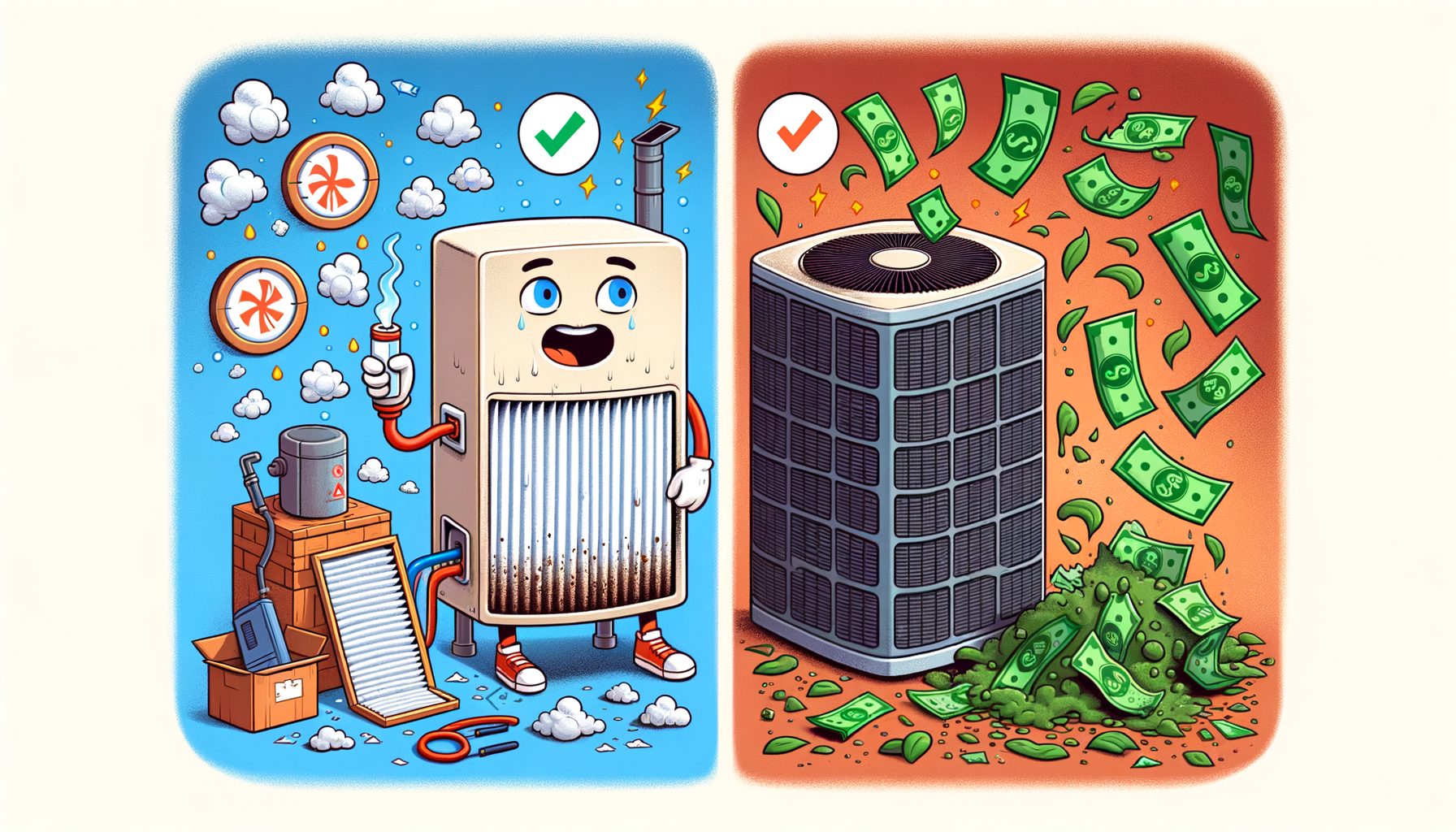
If the AC feels weak, cycles drag on, or your utility bill keeps creeping up, a likely culprit hides in plain sight: the air filter. Plenty of homeowners underestimate the filter’s influence on efficiency, performance, and cost. Surprisingly, that small rectangle can determine whether the system cools with ease or labors, whether you breathe clean air or recirculate pollutants, and whether monthly charges fall or spike. The good news? Learn the mechanics and a few simple optimization steps, and you’ll restore comfort, shield your equipment, and cut expenses—quickly.
The hidden problem: airflow restriction and why filters matter
Reliable cooling depends on steady airflow moving heat from your indoor air to the refrigerant and out of the building. Sitting at the front of that path, the air filter traps dust, dander, pollen, and other particles before they coat the blower, evaporator coil, and ducts. With a clean filter, the system breathes easily; with a clogged one, it struggles.
Here’s how restricted airflow sets off a chain reaction:
– Static pressure climbs in the ductwork as the fan fights a dense filter. The blower works harder—spinning faster or running longer—to meet airflow targets. Extra effort shows up as higher electricity use.
– Less air reaches the evaporator coil. With inadequate airflow, the coil becomes too cold and can ice over. Icing blocks even more air, forcing longer runtimes—a downward spiral often mistaken for “low refrigerant” when the real issue is a neglected filter.
– Heat transfer drops. An AC cools by moving heat; reduced airflow means less heat reaches the coil each minute, so rooms take longer to hit the setpoint. Thermostats call for longer cycles, energy consumption rises, and comfort falls.
Reputable organizations point to the same takeaway: dirty filters waste energy. ENERGY STAR notes that replacing or cleaning filters on a regular schedule improves efficiency and extends equipment life, recommending monthly checks during heavy use. See their guidance here: ENERGY STAR: Maintain Your Equipment. The U.S. Department of Energy adds that proper maintenance and filtration are foundational to performance and operating cost: DOE: Central Air Conditioning.
In everyday terms, the pressure drop across a filter—measured in inches of water column (in. w.c.)—tells the story. When pressure drop rises at the same airflow, the fan is doing more work. As dust loads up, pressure drop grows and efficiency falls. Technicians routinely see 5–15% higher AC energy use when filters are overdue, with bigger penalties in dusty or high-pollen climates. So filters aren’t just about air quality—they’re a central lever for efficiency and cost control.
Efficiency and energy costs: what a clean vs. clogged filter does to your bill
Let’s put numbers to it. Picture a typical 3-ton (10.5 kW) split-system AC with a fan drawing 400–700 watts and a compressor drawing 1.5–2.5 kW, depending on conditions. If a dirty filter adds only 10% to runtime or fan work to meet the same cooling load, energy use can jump by 150–300 kWh per month during peak season (assuming 5–7 hours of daily runtime). At $0.20/kWh, that’s $30–$60 monthly—more than the price of a new filter. In regions with higher rates, the penalty grows; during cooler months, it shrinks but rarely disappears.
There’s a compounding effect as well. Higher static pressure stresses the blower motor (especially PSC motors) and can prompt variable-speed ECM motors to draw more power to maintain airflow. Reduced airflow may raise compressor discharge temperatures over time—costs that don’t always appear immediately on the bill but can shorten component life and trigger future repairs.
Well, here it is: a simplified snapshot of filter characteristics and their typical implications. Values vary by brand and size; consult manufacturer data sheets for exact ratings.
| Filter Type / MERV | Typical Initial Pressure Drop at ~300 fpm (in. w.c.) | Filtration Effectiveness (Particles) | Typical Replacement Interval | Potential Energy Impact When Dirty |
|---|---|---|---|---|
| Fiberglass (MERV 2–4) | ~0.05–0.10 | Captures large dust; limited fine particle removal | 30 days | Moderate; loads quickly, allows coil fouling over time |
| Pleated (MERV 8) | ~0.15–0.25 | Better for dust, lint, some pollen | 60–90 days | 5–10% higher energy use if overdue |
| Pleated (MERV 11) | ~0.20–0.30 | Improved capture of smaller particles | 60–90 days | 5–15% higher energy use if overdue |
| Pleated (MERV 13) | ~0.25–0.35+ | High efficiency; captures more fine particulates | 60–90 days (monitor monthly) | Can be efficient if sized right; large penalty if undersized or clogged |
Two big insights emerge: higher MERV isn’t automatically “harder to push air through” if the filter offers more surface area (deeper pleats add media, lowering pressure per square inch). Then this: any filter turns into an energy hog when dirty. In other words, the best “efficiency upgrade” is keeping whatever filter you use clean and correctly sized. For a deeper dive on standards and MERV ratings, see EPA: Guide to Air Cleaners in the Home and the ASHRAE 52.2 framework via NAFA: Understanding MERV.
Performance and comfort: temperature, noise, and equipment wear
Energy costs tell only half the story. The filter strategy you choose also shapes daily comfort and equipment health. With healthy airflow, systems deliver steady, even cooling with a supply-air temperature drop of about 16–22°F (9–12°C) across the evaporator coil. When airflow falls because of a clogged filter, that temperature drop can become excessive—ducts feel very cold, yet rooms cool slowly because less air moves per minute. Expect longer cycles, hot spots in distant rooms, and sometimes humidity issues as latent removal falls out of balance.
Noise can be a clue. Whistling at the return grille, rattling panels, or a “howling” sound often points to high static pressure. Causes include a restrictive or dirty filter, undersized return ductwork, or both. If noise spikes after installing a new high-MERV filter, the system may need a larger filter rack, a deeper pleated filter (2–4 inches instead of 1 inch), or added return air to keep pressure in check.
Mechanical wear accumulates quietly. Fine dust bypasses dirty filters or sneaks around the edges, coating the evaporator coil. A fouled coil alone can add 5–10% to energy use, even after the filter is replaced, because heat transfer stays impaired until the coil is cleaned. Fan motors that fight high static pressure run hotter and fail sooner. Compressors facing low airflow can short-cycle or operate at suboptimal suction pressures, reducing lifespan. What’s interesting too: national lab research links filtration choices, fan energy, and system health; see the Lawrence Berkeley National Laboratory review: Energy Impacts of Air Filtration.
Practical checks you can do today:
– Hold a hand near a supply vent: weak airflow and long, lukewarm cycles often signal a clogged filter.
– Inspect the filter monthly during summer. If light won’t pass through the media or the surface looks gray and fuzzy, replace it.
– Listen on startup: unusually loud return noise can mean the filter is too restrictive for the available surface area.
– If problems persist after a new filter, ask a technician to measure static pressure and airflow. Small upgrades—like a larger return grille or a 4-inch media cabinet—can transform comfort and cut noise.
Choosing the right filter and maintenance schedule: MERV, HEPA, and smart habits
Start with clear goals—energy savings, air quality, equipment protection—or ideally all three. For most homes, MERV 8–11 pleated filters balance particle capture with airflow. For allergies, wildfire smoke, or urban pollution, MERV 13 can deliver meaningful indoor air quality gains. Keep in mind, higher MERV requires enough filter surface area to avoid excessive pressure drop. A 4-inch-deep MERV 13 with many pleats can be easier on your system than a 1-inch MERV 11 with fewer pleats.
And what about HEPA? True HEPA offers very high capture efficiency but usually isn’t appropriate as a direct replacement in standard residential air handlers due to high pressure drop. If HEPA-level performance is needed, consider a dedicated portable HEPA cleaner for bedrooms and living areas or a professionally designed bypass HEPA add-on that won’t starve the main system of airflow. The EPA outlines options and trade-offs here: EPA: Air Cleaners in the Home.
Maintenance timing depends on environment and use:
– Typical suburban home with pets: check monthly; replace every 60 days (30 days in peak season or heavy shedding).
– Urban or wildfire-prone areas: check every 2–4 weeks in smoke season; replace as soon as the filter darkens significantly.
– Vacation or low-occupancy homes: every 90 days may suffice, but don’t exceed manufacturer guidance.
Reusable/washable filters can be appealing, yet they often capture fewer fine particles and, if not dried perfectly, can introduce moisture to the system. If you use them, clean gently, dry fully, and inspect the coil periodically. Many technicians still prefer quality pleated disposables for consistent results.
Simple best practices:
– Oversize the filter surface area when possible. A larger media cabinet or a second return grille lowers pressure drop and helps high-MERV filters work efficiently.
– Install with the arrow toward the blower. Reversed filters add resistance and can shed fibers.
– Seal gaps around the rack with proper gasketing so air can’t bypass the media.
– Keep records: write the install date on the frame and set a phone reminder. Smart thermostats can automate this.
– Pair filtration with source control for allergies (no smoking indoors, shoe-free policy, frequent vacuuming with HEPA vacuums) and ventilation per standards like ASHRAE 62.2 where applicable: ASHRAE Standards.
Quick ROI playbook: simple steps to save this week
Want fast results? Follow this one-week plan focused on actions with immediate payback:
Day 1: Inspect and replace the filter. Choose a pleated MERV 8–11 if unsure, or MERV 13 with a 2–4 inch depth if your system supports it. Confirm size on the old filter. If the media is discolored across most of its surface or light won’t pass through, it’s due.
Day 2: Check airflow room by room. With the system running, confirm every supply vent delivers a steady stream of cool air. Weak distant rooms often benefit from a cleaner filter or a larger return grille.
Day 3: Listen for noise. If return grilles howl with a new filter, consider a deeper media cabinet or adding a second return. A technician can measure static pressure; many residential systems target about 0.3–0.5 in. w.c. total external static (verify manufacturer specs).
Day 4: Clean return grilles and nearby dust sources. Vacuum and wipe grilles; reducing dust extends filter life.
Day 5: Optimize thermostat schedules. Use reasonable setpoints and schedule setbacks when away. Lower runtime reduces filter loading and energy use.
Day 6: Track energy. Photograph your electric meter or note your smart meter/utility app reading. After a fresh filter, you should see fewer runtime hours for the same comfort—especially on similar-weather days.
Day 7: Plan ahead. Buy a multipack of filters, set monthly reminders, and note your preferred brand/model. If you own your home and a small 1-inch rack limits upgrades, ask an HVAC pro about a 4-inch media cabinet retrofit—often a quick project that pays off with quieter operation and better filtration at lower pressure drop.
These steps are low-cost, low-risk, and typically deliver immediate comfort gains alongside measurable savings.
FAQs
Q: How often should I replace my AC filter?
A: Check monthly during cooling season. Most homes replace every 60–90 days, every 30–60 days with pets or heavy use, and more often during smoke or pollen surges.
Q: Is a higher MERV rating always better?
A: Higher MERV captures finer particles and improves air quality, but only if your system has enough filter surface area to keep pressure drop low. A deeper pleated filter or larger rack often enables higher MERV without efficiency loss.
Q: Can a dirty filter really damage my AC?
A: Yes. Static pressure rises, airflow falls, coil icing can occur, and runtimes stretch. Over time, the blower and compressor face extra stress, which can lead to costly repairs.
Q: Are washable filters a good idea?
A: They can work but often capture fewer fine particles. If used, clean gently, dry completely, and monitor performance. Pleated disposables remain the most consistent choice for many systems.
Q: What if my system gets noisy with a new filter?
A: Noise often signals high static pressure. Try a deeper filter (2–4 inches), a larger return grille, or consult a technician to measure static pressure and recommend duct or filter upgrades.
Conclusion
Air filters do far more than catch dust; they regulate the airflow your AC needs to move heat efficiently. In this guide, you saw why airflow drives both comfort and cost, how a dirty filter can raise energy use by 5–15% or more, and how neglect triggers noise, uneven temperatures, coil icing, and premature wear. You also picked up practical strategies to choose the right MERV level, size filters to keep pressure drop low, and set a maintenance rhythm that protects both efficiency and indoor air quality. The quick ROI playbook offers a week of steps that translate into quieter operation, steadier comfort, and measurable savings.
Now it’s your move. Check the filter today. If it’s gray and matted, replace it. If the return grille howls, consider a deeper media cabinet or a larger return. Set a monthly reminder, buy a multipack, and track energy use after the change. Ready for a bigger upgrade? Talk to a licensed HVAC professional about right-sizing filtration and lowering static pressure across the system. These actions cost little compared to the comfort and savings they deliver.
Small habits, repeated, compound into real money saved and healthier air breathed. Your AC is a heat-moving machine—give it the airflow it deserves, and it will reward you with comfort, efficiency, and reliability. What simple step will you take today to help your system breathe easier?
Sources
– ENERGY STAR – Maintain Your Equipment: https://www.energystar.gov/saveathome/heating_cooling/maintain_your_equipment
– U.S. Department of Energy – Central Air Conditioning: https://www.energy.gov/energysaver/central-air-conditioning
– EPA – Guide to Air Cleaners in the Home: https://www.epa.gov/indoor-air-quality-iaq/guide-air-cleaners-home
– NAFA – Understanding MERV (ASHRAE 52.2 overview): https://www.nafahq.org/understanding-merv/
– Lawrence Berkeley National Laboratory – Energy Impacts of Air Filtration: https://eta-publications.lbl.gov/sites/default/files/lbnl-4963e.pdf