When your home feels hot, sticky, and uncomfortable, the problem might not be the weather—it might be your AC. Spotting urgent warning signs early can save money, prevent a full system breakdown, and protect your health. Waiting is the real risk: small issues (like a clogged filter or a failing capacitor) can snowball into big, expensive failures (like a burned-out compressor). In this guide, you’ll learn the key red flags, what they mean, and exactly what to do next—so you can stay cool, safe, and stress-free.
Weak Cooling or Airflow: The First Red Flag
Weak cooling or airflow is the clearest sign your air conditioner needs urgent attention. Rooms that stay warm while the AC runs—or a home where one room is chilly and another is hot—signal trouble. First move: check the “temperature split.” After the system runs 10–15 minutes, air from a supply vent should be roughly 9–12°C (16–22°F) cooler than the air entering the main return. A much smaller difference, or warm air blowing, is a serious red flag.
Plenty of culprits can cause poor performance. A clogged air filter is the simplest and most fixable; it chokes airflow and forces the system to overwork. If it’s been more than 1–3 months since your last change (sooner with pets or dust), swap it now. Blocked or closed supply registers also starve airflow—check for furniture, rugs, or curtains covering vents. Outside, a condenser packed with leaves, cottonwood fluff, or dust can’t dump heat; gently rinse it with a garden hose (avoid power washers that bend fins). Indoors, a frozen evaporator coil—ice on copper lines or access panels—usually points to low airflow, dirty filters, duct problems, or low refrigerant. See ice? Power the system off to thaw and prevent compressor damage.
Uneven rooms often point to duct issues: leaks, kinks, poor insulation, or incorrect balancing. In many homes, 20–30% of cooled air is lost through leaky ducts—comfort drops while bills rise. A failing blower motor or weak capacitor may also be to blame; telltale signs include a fan that struggles to start or a unit that hums but won’t spin until nudged (don’t try this yourself). Short cycling—rapid on/off—means the system can’t move enough air to cool the house properly. And when indoor humidity stays high (above ~60%), expect clamminess and possible mold growth; underperforming or oversized systems, dirty coils, or airflow restrictions are common causes.
Urgency check: Warm air from vents, visible ice, a burning smell, or constant self-shutdowns call for immediate action. Turn cooling off and contact a qualified HVAC technician. Running under these conditions can overheat the compressor—the priciest part to replace.
Strange Noises, Smells, and Leaks: Sensory Clues You Shouldn’t Ignore
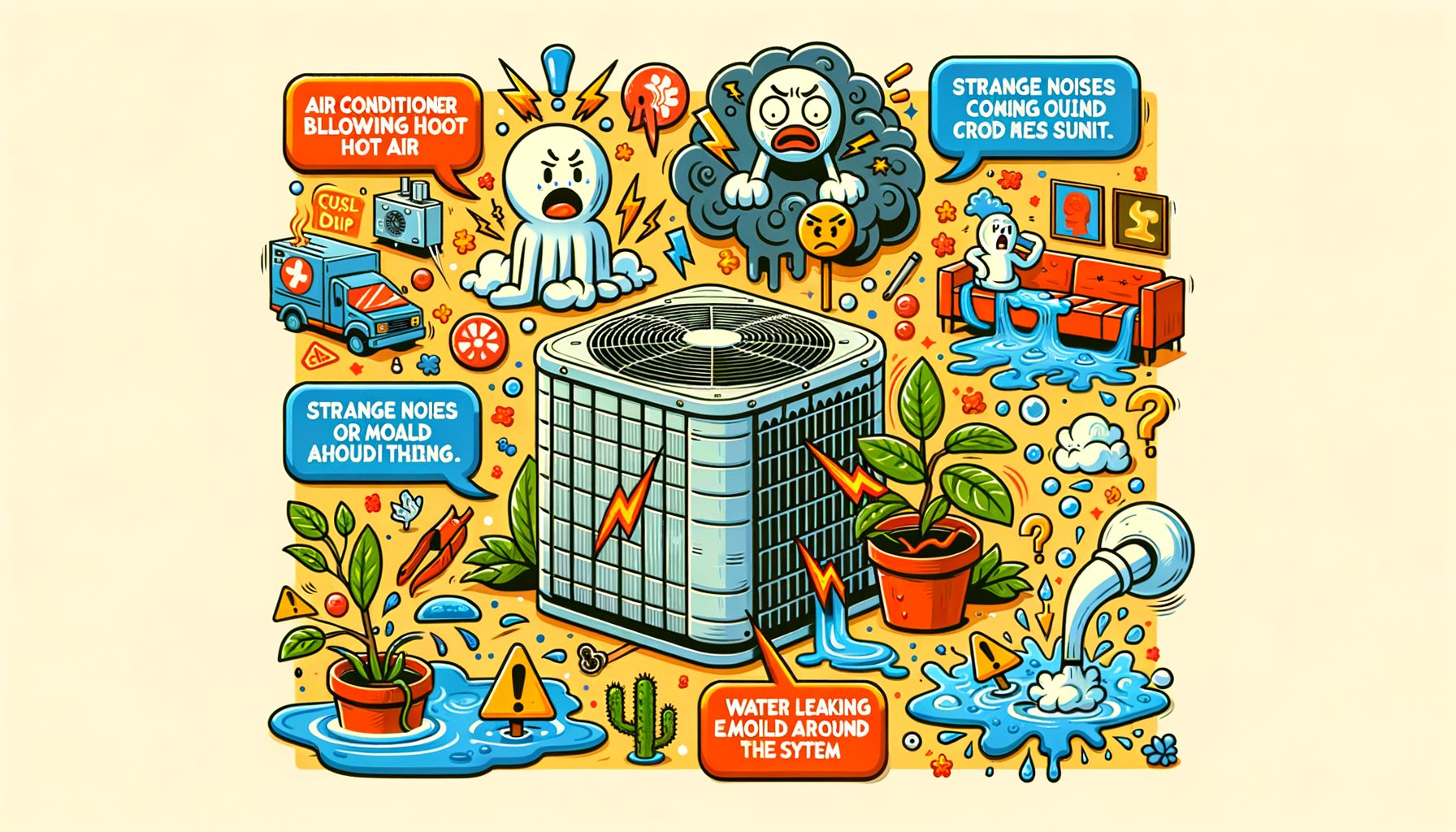
Your senses often catch AC trouble before it becomes catastrophic. Start with sounds: grinding or screeching usually means a failing blower or condenser fan motor bearing—ignore it and the motor may seize. Loud buzzing or humming often points to an electrical problem like a bad capacitor or contactor; the unit may struggle to start, overheat, or trip breakers. Rattling or clanking suggests loose panels or screws—or even a failing compressor mount. Persistent hissing combined with poor cooling or ice buildup strongly suggests a refrigerant leak.
Odors tell a story too. A sharp burning or “hot electrical” smell demands an immediate shutdown and a pro inspection; overheating wires, a shorted motor, or a blower issue could be at fault. A musty, dirty-sock odor points to microbial growth on the evaporator coil or in the drain pan; beyond discomfort, indoor air quality suffers—especially for people with asthma or allergies. Sour or chemical smells paired with poor cooling can indicate refrigerant issues; because refrigerants are regulated and exposure can be harmful, leave diagnosis and handling to a licensed technician.
Leaks deserve attention. Water under the indoor unit typically signals a clogged condensate drain line. As the AC removes humidity, water should flow to a drain; when algae or debris block the line, water backs up and may trigger float switches or overflow onto floors and ceilings. Often, you can shut power off and flush the line with warm water or a 50/50 vinegar solution; if access is limited or clogs keep returning, schedule service. Ice on refrigerant lines is different: shut the system down to thaw and protect the compressor; ice points to airflow problems or low refrigerant that only a technician can fix.
Put safety first. If you smell burning, see smoke, or hear sharp electrical arcing, turn the system off at the thermostat and the breaker. Suspect a refrigerant leak? Ventilate the area and keep children and pets away. For musty odors, run the fan and consider a high-MERV filter after a professional coil cleaning. Early action turns risk into a routine repair, protecting both your home and your health.
Spiking Energy Bills and Short Cycling: Hidden Signs of System Stress
Not every warning sign is loud or obvious. Two costly “silent” clues are higher-than-normal energy bills and short cycling. If your electricity bill jumps 15–30% compared with similar weather last month or the same period last year, your AC may be running longer and harder than it should. Likely causes include dirty coils, duct leaks, low refrigerant, a failing capacitor, or a compressor losing efficiency. Compare runtime as well: if cycles used to last 15–20 minutes but now the unit turns on and off every 5–7 minutes, you’re seeing short cycling. Such cycling wastes energy, stresses components, and leaves humidity high.
Root causes vary. Oversized units cool coils quickly but don’t run long enough to dehumidify. Dirty filters choke airflow; iced coils reduce heat transfer. Thermostats placed in sunbeams or near supply vents misread room conditions. Electrical components can falter. Even a clogged drain pan safety switch can shut the unit off early and repeat the cycle. Over time, short cycling is brutal on the compressor—the most critical and expensive component.
Use this quick reference table to connect symptoms to likely causes and actions:
| Warning sign | Likely cause | DIY check | Urgency |
|---|---|---|---|
| Weak or warm airflow | Clogged filter, iced coil, duct leak, failing blower | Replace filter, inspect vents, check for ice | High if warm air or ice present |
| Short cycling (5–7 min bursts) | Oversized unit, dirty filter, low refrigerant, capacitor | New filter, correct thermostat placement | High—risk to compressor |
| High energy bill (15–30% jump) | Dirty coil, duct leaks, low refrigerant, aging compressor | Clean condenser, check ducts if accessible | Medium to high |
| Hissing noise with poor cooling | Refrigerant leak | Visual ice check only—no DIY refills | Urgent—call licensed tech |
| Burning smell, tripped breaker | Electrical fault, failing motor | Power off and do not reset repeatedly | Immediate shutdown, pro repair |
For data-driven monitoring, log your thermostat’s runtime (many smart thermostats do this) and note outdoor temperatures. A steady rise in runtime at similar outdoor conditions signals declining efficiency. An inexpensive digital thermometer can measure supply vs. return temperatures; a split consistently below ~9°C (16°F) indicates trouble. Bottom line: if bills spike or the AC can’t stay on consistently, act now. Quick intervention prevents failures and keeps energy costs under control.
When to DIY and When to Call a Pro: Practical Steps, Costs, and Timing
Some AC problems are ideal for quick DIY fixes, while others demand a certified technician. Here’s a practical, step-by-step way to decide—and act fast.
Start with safe DIY steps:
– Replace the air filter (every 1–3 months; monthly if you have pets or allergies). Choose the right MERV rating—too high can restrict airflow.
– Set the thermostat to “Cool” and “Auto,” not “On” (fan “On” can blow warm air between cycles). For testing, set the temperature at least 2–3°C (4–6°F) below room temperature.
– Check the outdoor condenser: clear a 60–90 cm (2–3 ft) radius of plants and debris; gently hose the coil from the outside in.
– Inspect the indoor unit for ice or water. If iced, turn the system off and let it thaw fully before restarting.
– Clear the condensate drain: if accessible, pour a cup of white vinegar into the drain line monthly to help prevent algae.
– Confirm all supply and return vents are open and unblocked.
– Measure the temperature split at a supply and the main return after 10–15 minutes of operation.
Call a pro immediately if you see or suspect:
– Burning or electrical odors, frequent breaker trips, or visible arcing.
– Refrigerant issues (ice returning after thaw, hissing, oily residue on lines, weak cooling).
– Persistent short cycling after filter changes and thermostat checks.
– Fan or compressor not starting, buzzing at the outdoor unit, or warm air from vents.
– Water damage from repeated drain overflows or evidence of microbial growth on the coil.
Typical cost guidance (varies widely by region and brand; USD for reference):
– Seasonal tune-up: $80–$200
– Capacitor or contactor replacement: $120–$400
– Condensate drain cleaning: $100–$250
– Refrigerant leak find and fix: $300–$1,500+ (repairs plus refrigerant)
– Blower motor: $400–$900
– Compressor replacement: $1,200–$3,000+ (often consider system replacement if older)
Facing a major repair on a 10–15+ year-old system—especially one using an older refrigerant? Discuss replacement options and efficiency gains with a licensed HVAC contractor. New high-efficiency units can cut cooling costs, improve comfort, and control humidity more effectively. Always review warranties and confirm your technician is certified for refrigerants and electrical diagnostics. For prevention, schedule annual maintenance at the start of cooling season and keep the outdoor coil clean mid-season.
Q&A: Fast Answers to Common AC Repair Questions
Q: How do I know if my AC problem is urgent versus routine?
A: Burning smells, warm air, ice on lines, short cycling, or breaker trips are urgent. Filter changes, minor airflow issues, or slightly higher bills can be routine—unless they persist after basic DIY steps.
Q: Can I add refrigerant myself if cooling is weak?
A: No. Refrigerant handling requires certification and proper leak detection. Adding refrigerant without fixing leaks is illegal in many regions and can damage your system further.
Q: Is it normal for water to drip around the indoor unit?
A: A small amount of water in the drain pan is normal; puddles on the floor are not. A clogged condensate line can overflow and should be cleared quickly to prevent water damage.
Q: How often should I schedule professional maintenance?
A: At least once a year—ideally before peak cooling season. Regular maintenance improves efficiency, catches small problems early, and protects warranties.
Conclusion: Act Early, Stay Cool, Save Money
If your home isn’t cooling well, the AC makes odd noises or smells, energy bills are surging, or the system keeps turning off and on, those are more than annoyances—they’re warning signs your air conditioner needs repair urgently. We covered the biggest red flags: weak airflow and warm air, strange noises and odors, water or refrigerant leaks, spiking bills, and short cycling. You now know how to check a quick temperature split, clear basic blockages, and decide when to power down and call a professional. In many cases, a simple filter swap or coil cleaning restores comfort fast. Ignoring electrical smells, refrigerant issues, or repeated short cycling, though, risks a major breakdown and a major bill.
Proactive care pays off: change filters regularly, keep the outdoor condenser clear, flush the condensate line, and schedule an annual tune-up. Notice urgent signs like burning odors, ice after thawing, or breaker trips? Shut the system down and book same-day service to protect your compressor and your home. For older systems staring down big repairs, ask about replacements and efficiency upgrades; a modern, properly sized unit can deliver quieter operation, lower bills, and better humidity control.
Here’s your call-to-action: take five minutes right now. Check the filter, open the vents, clear the outdoor unit, and measure your temperature split. If anything feels off or urgent, schedule a licensed HVAC technician today. Share this guide with a friend or neighbor—catching problems early saves comfort and cash when the heat hits.
Stay cool, stay safe, and remember: small fixes today prevent big failures tomorrow. What’s the first step you’ll take to make your AC run better this week?
Helpful resources and further reading:
– Energy efficiency and maintenance tips: ENERGY STAR Heating & Cooling
– Indoor air quality and humidity considerations: ASHRAE Standards & Guidelines
– Refrigerant safety and regulations: U.S. EPA SNAP Program
– Hot weather health guidance: CDC Extreme Heat Tips
Sources:
– U.S. Department of Energy. “Maintenance for Air Conditioners.” energy.gov
– ENERGY STAR. “Heating & Cooling Guide.” energystar.gov
– ASHRAE. “Thermal Environmental Conditions and IAQ Guidance.” ashrae.org
– U.S. EPA. “Significant New Alternatives Policy (SNAP).” epa.gov